
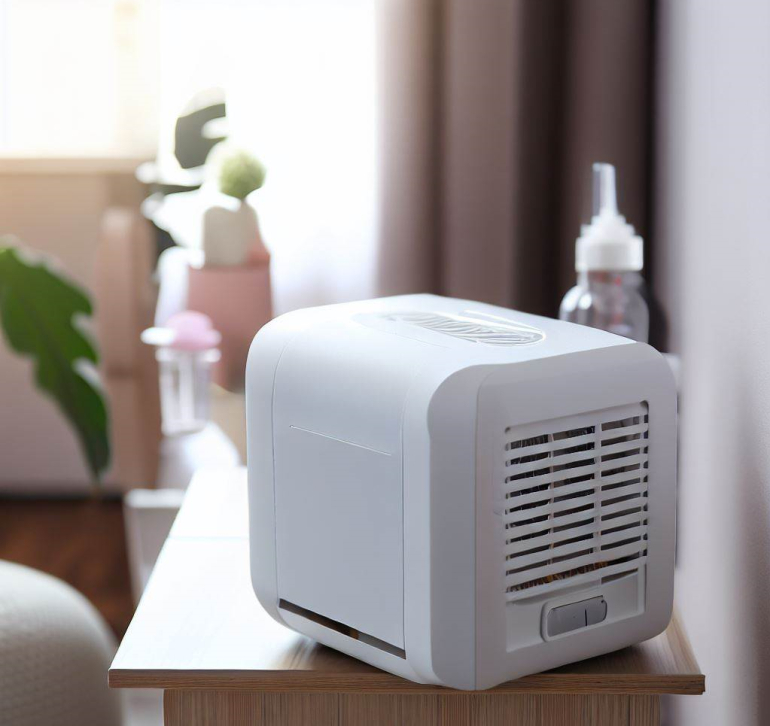
The matter of mould and dampness is topical for many people. Small-scale dehumidifiers are applicable in order to resolve this problem. Inappropriately to their small sizes, these dehumidifiers, however, are very active in keeping a nice indoor environment.
They are not functional in a way that body size is being compromised. This guide starts you off with the high-end, high-performance compact dehumidifiers available to handle your indoor dampness. By the way of those handy tools, you can count on a healthy home space with zero high moisture levels. We can now discuss their small, but powerful, potential.
Why Should We Use a Small Dehumidifier Instead of a Large One?
Small dehumidifiers, despite their compact size, provide powerful dehumidification, effectively maintaining an optimal indoor atmosphere. They are a suitable choice for those seeking economical, space-saving, and efficient options to combat excessive humidity in their homes or workspaces.
Key reasons to opt for small dehumidifiers:
- Flexibility: Compact size allows for easy placement anywhere in the home from bedrooms, kitchens, closets to offices or garages.
- Efficient Operation: They are designed with a high moisture removal rate, making them ideal for high-humidity areas.
- Energy-Saving: Smaller dehumidifiers tend to consume less energy, offering cost-effective operation.
- Practical For Smaller Spaces: Their design is suitable for smaller areas or as secondary dehumidifiers, providing versatility for various needs.
- Quiet Operation: They often operate more quietly compared to larger models, ensuring minimum disturbance.
- Cost-effective: Generally, smaller dehumidifiers are more affordable than larger ones, making them an economical choice.
Top 8 best small dehumidifiers 2023
1 NETTA Dehumidifier 800ml Mini Air Dehumidifier
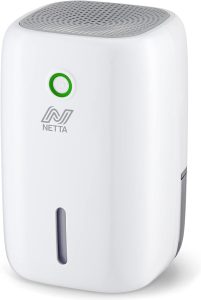
If you’re looking for a compact device that excels in smaller spaces, the NETTA 800ml Mini Air Dehumidifier is a top contender. With an extraction rate of 330ml of excess moisture daily, it’s perfect for small bedrooms, kitchens, and cupboards.
Its compact size allows for placement anywhere, and it consumes low energy, costing less than 1p per hour to run. The ultra-quiet operation ensures minimal disturbance, and the auto shut-off feature activates when the water tank is full. An indicator light also signals when the tank needs emptying.
| Capacity | 800 Millilitres |
| Tank volume | 800 Millilitres |
| Noise | 35 dB |
| Product dimensions | 14.5 x 14.5 x 22.5 |
| Power | 22 watts |
| Weight | 1.1kg |
2 Pro Breeze® 1500ml Premium Dehumidifier
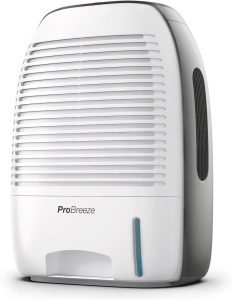
The Pro Breeze® 1500ml Premium Dehumidifier is a top choice for small spaces, thanks to its high water removal capacity and energy efficiency. With the ability to remove up to 500ml of water per day and a 1500ml water tank capacity, it’s a powerhouse in a compact size.
This is one of the best dehumidifiers and is suitable for rooms up to 2200 cubic feet, making it ideal for bedrooms, small living areas, and offices. Its ultra-quiet operation ensures minimal disruption, and the intelligent auto shut-off feature activates when the water container is full, providing peace of mind.
Additionally, these Peltier dehumidifiers tend to use up to 45% less energy per hour than similar models. If you’re looking for an effective, energy-saving solution to combat excess humidity, the Pro Breeze® 1500ml Premium Dehumidifier is a reliable option for your small space.
| Capacity | 1500 Millilitres |
| Tank volume | 1500 Millilitres |
| Noise | 28 dB |
| Product dimensions | 16D x 22.3W x 30.8H |
| Power | 22 watts |
| Weight | 2 kg |
3 HKJIMO Small Quiet Dehumidifier
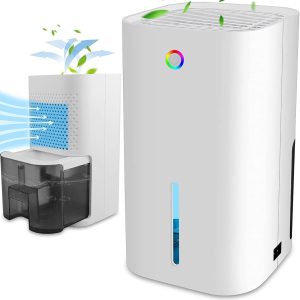
When looking for a reliable compact moisture remover, you’ll frequently come across the HKJIMO Small Quiet Dehumidifier, known for its efficient moisture removal and quiet operation.
This compact unit packs a punch, with a dehumidification capacity of 300ml per day, making it suitable for rooms ranging from 50 to 220 square feet.
Its ultra-quiet operation ensures that it won’t disrupt your daily activities. The one-button control and energy-saving features add to its user-friendly design.
While it’s not suitable for use below 5°C, it’s a versatile option for bedrooms, bathrooms, closets, basements, offices, garages, and RVs.
The smart auto shut-off feature ensures safety, and its energy efficiency makes it an attractive choice for maintaining a dry and comfortable living environment.
| Capacity | 850 Millilitres |
| Tank volume | 850 Millilitres |
| Noise | 40 dB |
| Product dimensions | 13 x 13 x 28 cm |
| Power | 22.5 watts |
| Weight | 898.11 g |
4 CONOPU Dehumidifier 2300ML

Are you looking for a powerful small device? The CONOPU Dehumidifier 2300ML might just be what you need.
With its 2300-millilitre capacity, this compact appliance offers automatic defrosting to prevent frost buildup and three working modes – strong mode, sleep mode, and auto mode. It features dual solid-state modules for increased dehumidification and shuts off automatically when the water tank is whole or the timer is up.
The stylish design, see-through water tank, and colour-changing LED lights add a nice touch to its functionality. It’s suggested for small rooms or as a secondary dehumidifier, making it a versatile option for various needs.
| Capacity | 2300 Millilitres |
| Tank volume | 2300 Millilitres |
| Noise | 40 dB |
| Product dimensions | 30.5 x 15.3 x 22.3 |
| Power | 22.5 watts |
| Weight | 2.15 kg |
5 HONMICON Mini Dehumidifier
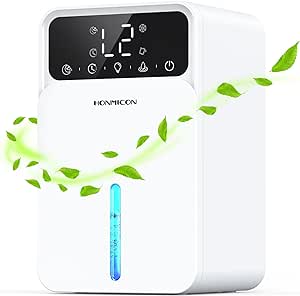
You’ll appreciate the HONMICON Mini Dehumidifier’s efficient moisture absorption and compact design.
This high-efficiency dehumidifier can extract up to 350ml of moisture per day, making it ideal for high-humidity areas like the bathroom, kitchen, closet, car or bedroom.
It effectively removes moisture from the air, mould and odour, creating a healthier and more comfortable living environment.
The dehumidifier offers two dehumidification mode options: quiet sleep mode and high power mode, along with a 12-hour timer for energy-saving operation.
The automatic defrost feature, sleep mode, and efficient/quiet dehumidification, combined with the 7 LED lights, enhance its functionality.
With 4.8 out of 5-star product reviews and positive feedback on its effectiveness, compact size, and quiet operation, it’s a top choice for those looking for a portable, efficient and easy-to-use dehumidifier.
| Capacity | 1500 Millilitres |
| Tank volume | 1500 Millilitres |
| Noise | 30 dB |
| Product dimensions | 24D x 15W x 13.8H |
| Power | 22.5 watts |
| Weight | 1.43 kg |
6 Pro Breeze 1000ml Dehumidifier
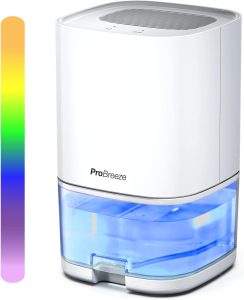
The Pro Breeze 1000ml Dehumidifier is a compact and efficient solution for removing excess moisture from your living spaces. It offers convenience and practicality for small areas in need of dehumidification.
This small device is designed to be quiet, portable, and suitable for spaces like the kitchen, bathroom, bedroom, conservatory, garage, or office. It can remove up to 450ml of moisture per day and operates at 20-30℃ and 60-80% relative humidity. Its running cost is as low as 1p per hour.
The Pro Breeze 1000ml Dehumidifier has a large 1000ml water tank and, a compact, lightweight, and portable design. It also features a 4-hour switch-off timer for nighttime use, making it a versatile choice.
However, some users have reported issues such as leakage after extended use and acoustic levels, particularly at night.
| Capacity | 450 Millilitres |
| Tank volume | 1000 Millilitres |
| Noise | 37 dB |
| Product dimensions | 15.1D x 15.1W x 28H |
| Power | 36 watts |
| Weight | 1.2 kg |
7 JERVAMNI Small Dehumidifier
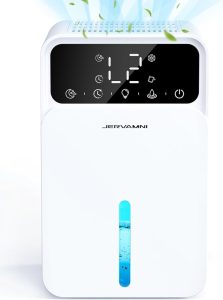
The JERVAMNI Dehumidifier is another compact solution for removing excess moisture from your living spaces, offering convenience and practicality for small areas in need of dehumidification.
It features a sleep mode with noise reduction technology for silent operation at night and an automatic/high-efficiency mode for efficient moisture extraction.
The appliance also boasts 7-color LED lights to create a warm atmosphere and a timer function for unattended operation.
With advanced semiconductor technology, it can absorb up to 350ml of moisture from the air and is effective in environments with high humidity and temperature.
Additionally, it adapts to various environments with defrost mode for low-temperature settings and quick absorption of excess moisture in high-humidity areas, making it a versatile option for different spaces.
| Capacity | 800 Millilitres |
| Tank volume | 800 Millilitres |
| Noise | 30 dB |
| Product dimensions | 24.2 x 15 x 13.8 |
| Power | 37 watts |
| Weight | 1.45 kg |
8 EasyAcc 1200ml Dehumidifier
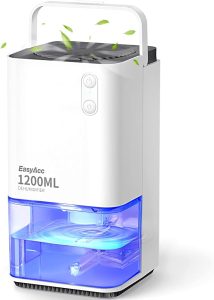
Looking for a smaller appliance that offers high-capacity moisture extraction and versatile operation? The EasyAcc 1200ml Dehumidifier might be the perfect fit for you.
With its semiconductor refrigeration and powerful suction fan, this upgraded dehumidifier can collect up to 14 ounces (400ml) of water per day, making it ideal for spaces ranging from 50 to 220 square feet.
Users have praised its low sound level, energy-saving efficiency, and the convenience of its auto shut-off feature when the water tank is full. Additionally, the unit’s portable and compact design, along with its easy-to-clean and durable build, has garnered positive feedback.
It’s worth noting that this dehumidifier is recommended for use in closets, restrooms, bedrooms, RVs, small trailers, cabinets, walls, and windows, as well as for minor moisture problems and damp issues in cellars and caravans.
| Capacity | 1200 Millilitres |
| Tank volume | 1200 Millilitres |
| Noise | 35 dB |
| Product dimensions | 13.9D x 13.7W x 25.8H |
| Power | 790 watts |
| Weight | 1.51 kg |
Comparing Features Of Compact Dehumidifiers
The adage “good things come in small packages” carries for dehumidifiers. The finest dehumidifiers available in the market are often designed to be portable and suitable for use in smaller living spaces.
Having said that here are a few of the features that one should take into account whilst deciding on a smaller dehumidifier:
Size: Before purchasing, assess where you intend to position your dehumidifier. The device’s size should correspond with the area you aspire to station it in.
Energy Efficiency: Look for Energy Star-certified models which use less energy than traditional dehumidifiers. This will save money on electricity costs!
Noise Levels: For those who do not want loud operating noise, look for units with low dB ratings or soundproofing material surrounding them.
Price Range: Search for reviews and compare prices between different brands and models of compact moisture remover, depending on your budget.
Now that you are aware of the features that you must observe during your selection process, allocate time to investigate the diverse alternatives available and select the one that aligns with your requirements and financial plan most fittingly. Doing so will ensure your home remains dry without breaking the bank or creating too much noise pollution within its walls.
Assessing The Pros And Cons Of Portable Dehumidifiers
Humidity levels can pose a significant challenge in any household; thus, weighing the advantages and disadvantages of small appliances before determining their suitability for your needs is compulsory.
To begin with, let’s take a look at humidity rates. Smaller dehumidifiers are specifically designed to effectively and swiftly decrease indoor moisture levels. While they function optimally in spaces up to 3,000 square feet, their efficiency may counter depending on the room size.
When reviewing energy consumption, these appliances typically use less power than larger models. This makes them ideal for more cost-effective solutions for households with limited space or budget constraints.
Noise intensity is also significant when selecting a dehumidifier – smaller units typically generate less noise than their larger counterparts. Moreover, various models are crafted to be movable, making it easier to move them from one area of your pad to another based on your needs.
Lastly, when assessing cost options, analysing the price and considering the long-term benefits of deploying a smaller and more energy-efficient model is essential.
All things considered, plenty of advantages come with investing in a compact moisture remover – remember to research before purchasing one!
Finding The Best Small Dehumidifier For Your Needs
Discovering an appropriate dehumidifier for your home can present a challenging grind. It’s essential to consider various factors such as air rate, moisture levels, noise levels, energy consumption, and humidity levels. Each of these aspects is important in achieving the desired level of comfort, making it equally to consider them all.
It would aid if you made a knowledgeable decision about which device will best suit your necessities. When making this decision, it’s important to evaluate all of the features each model offers carefully.
Before selecting a dehumidifier for a specific room, carefully evaluate the available space. Consider the unit’s size, design, and energy efficiency rating to ensure it fits well and doesn’t consume excessive power. Pay attention to sound level ratings, too – some models emit more sound than others, which should factor into your choice.
Additionally, take note of any unique settings or functions that might come with specific units – these could help you better manage humidity levels in specific rooms or climates throughout your home. Ultimately, seeing a device that serves your budget and lifestyle requirements is key to achieving optimal air quality and moisture management in your home.
Why Clean Air Home’s Recommendations Deserve Your Trust
You can trust Clean Air Home’s recommendations for small dehumidifiers because they’re grounded in Dorian’s extensive expertise and hands-on testing. His background in HVAC and indoor air quality equips him to discern the most efficient and reliable models that will suit your space.
Dorian’s passion for home comfort means he’s tested a plethora of dehumidifiers, ensuring that you get advice based on real-world usage and performance.
His clear, concise writing makes understanding the complexities of humidity control a breeze. Whether you’re combating mould or just seeking fresher air, Dorian’s insights guide your choice.
Frequently Asked Question
What is a desiccant dehumidifier, and how does it differ from a compressor dehumidifier?
The first one uses a desiccant material to absorb moisture from the air, while the second one uses refrigerant coils. They’re best suited for different climates; desiccant dehumidifiers work better in colder, less humid conditions, while compressor dehumidifiers are ideal for warmer, more humid climates. Both are found in undersized dehumidifiers.
Can a small dehumidifier also work as an air purifier?
Some small devices come with an air purifier feature. However, not all do. You should specifically look out for a dehumidifier and air purifier model if you need both functionalities.
How effective are undersized dehumidifiers during winter months?
Small desiccant dehumidifiers can work exceptionally well during winter months, helping to banish dampness and maintain indoor humidity levels.
Can I use a slight dehumidifier to dry clothes?
Absolutely! Dehumidifiers of this size are excellent for laundry drying. They extract excess moisture from the air, speeding up the drying process of wet clothes.
Is a small dehumidifier suitable for room to room use?
Yes. Thanks to their compact size, slight dehumidifiers are not just ideal for small spaces, but they are also portable for room to room use.
Are small dehumidifiers cost-effective?
These devices are often the best budget buy. They’re lighter on the pocket initially and use less power, proving to be the best value in the long run.
Can a small dehumidifier tackle serious damp issues?
Yes. Are best suited for small spaces and can help control damp problems in smaller areas or rooms. For serious humid issues across large areas, a larger capacity dehumidifier might be required.
Which dehumidifiers are tried and tested to be the best?
The best dehumidifiers tried and tested are those that suit your specific requirements, including the room size, climate, and level of dampness. Be sure to examine product reviews and ratings before making a purchase.
